Heirs of Ambition: The Making of the Boleyns uncovers the story and the family behind England’s most obsessed-over queen, Anne Boleyn.
From the fields of Norfolk to the royal court, via city commerce, local government, liberal education and numerous wedding bells, the Boleyns emerge as just one of many newly prosperous and ambitious families seeking to make the best of a changing world. As they struggle upwards England is visited by famine, plague, revolt and civil war but also opportunity.
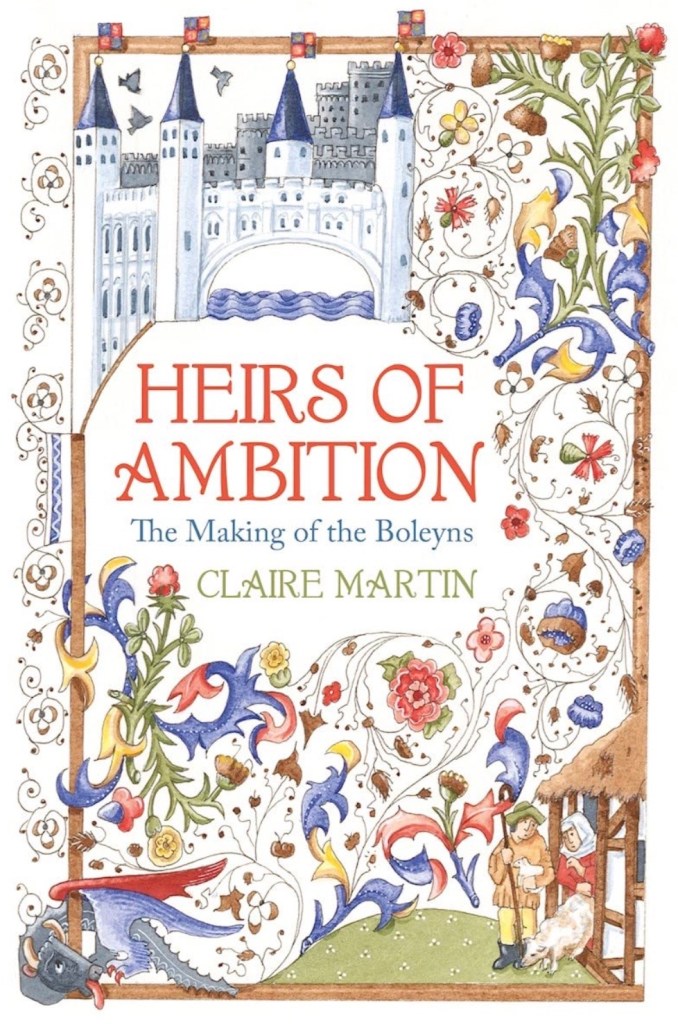
Struggling peasants in dirt-floored cottages scratch a living on tiny scraps of land. More than half are swept away by plague and revolt soaks the south-east in blood but hope lies in the teeming, timber-framed streets of London where ambitious merchants speculate and scheme. Meagre rations become venison pasties and straw-filled mattresses, featherbeds, but some things remain the same. Disease has no respect for gold and silver. War takes sons whose lives have barely begun. While the Boleyns’ new-found wealth delivered power and status they still lived in a violent world and life could be precarious, even for a queen.
From steady climb to bone-breaking fall, the Boleyns’s story is medieval life at its messy, prejudiced, unstable best.
Available now at your local independent bookshop or at:
Waterstones, Heirs of Ambition
Reviews
adventuresofatudornerd.com
https://adventuresofatudornerd.com/2023/11/15/book-review-heirs-of-ambition-the-making-of-the-boleyns-by-claire-martin/
Family Tree, December 2023
The Post-Mortem Accounts and Inventories of Sir Thomas Charlton (d. 1465) (Yorkist History Trust & Shaun Tyas, 2026)
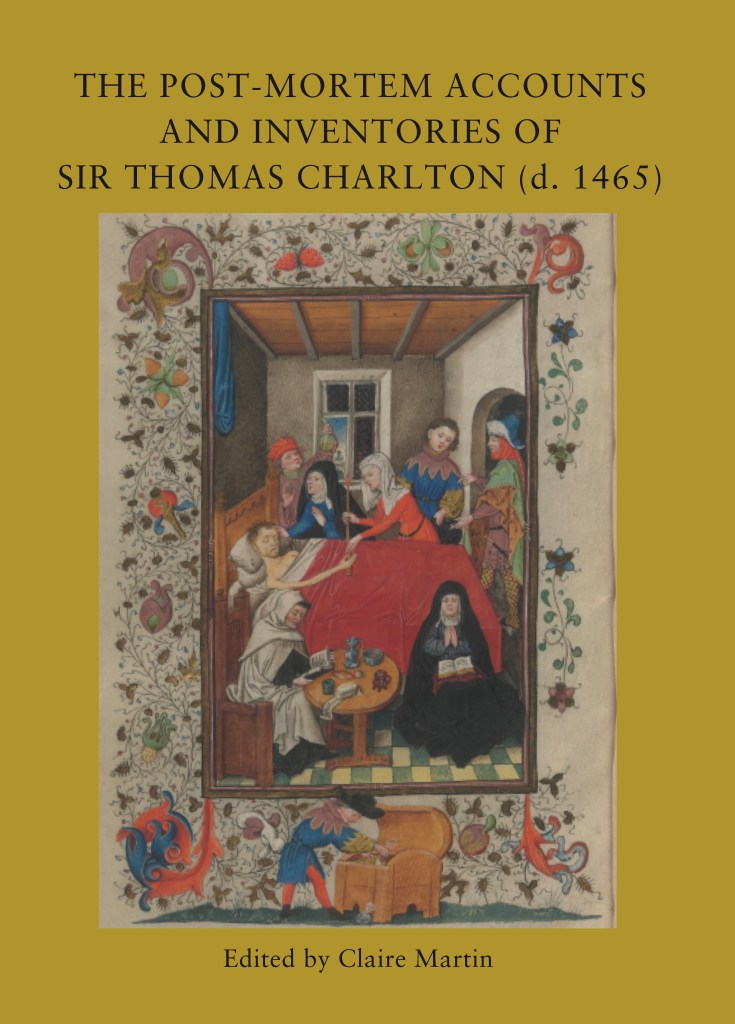
A scion of one of the wealthiest families in Middlesex, Sir Thomas Charlton (c.1417-1465) could claim relatives among London’s mercantile elite as well as kinship with Alice, countess of Salisbury, and her son, the earl of Warwick. Over the course of his life he served his country diligently. From his position on the Middlesex bench of J.P.s and on local commissions, to years of parliamentary industry and, eventually, the speaker’s chair. In many respects he was an ‘everyman’ for the lives of England’s greater gentry and when he died, following a short illness, in February 1465 his story, like so many others, would have come to an end were it not for the remarkable survival of an extensive collection of inventories and associated post-mortem accounts.
In the former we can walk through the rooms, barns and stables of Sir Thomas’s houses and between the ‘little black ambling nag’ and the enamel livery collar of suns and roses, there lies a microcosm of fifteenth-century life. There are riches that may be mined for material wealth in all its forms, from clothing, plate and jewels to intellectual treasure in a small collection of books; the practicalities of stable, farm and household to the well-stocked armoury of a knight. The meticulously prepared accounts offer a window into the daily details of estate management and the efforts that went into purchasing the wardship of Charlton’s heir and in the day book of Nicholas Mole we walk in the shoes of one overburdened steward, offering insight into what it meant to be a Medieval executor.
In life, Sir Thomas Charlton’s story would have been familiar to many members of Medieval gentry society. In death he left behind a collection of documents that would have been equally commonplace in their day but which are remarkable in their survival and, as such, invaluable to the historian.

